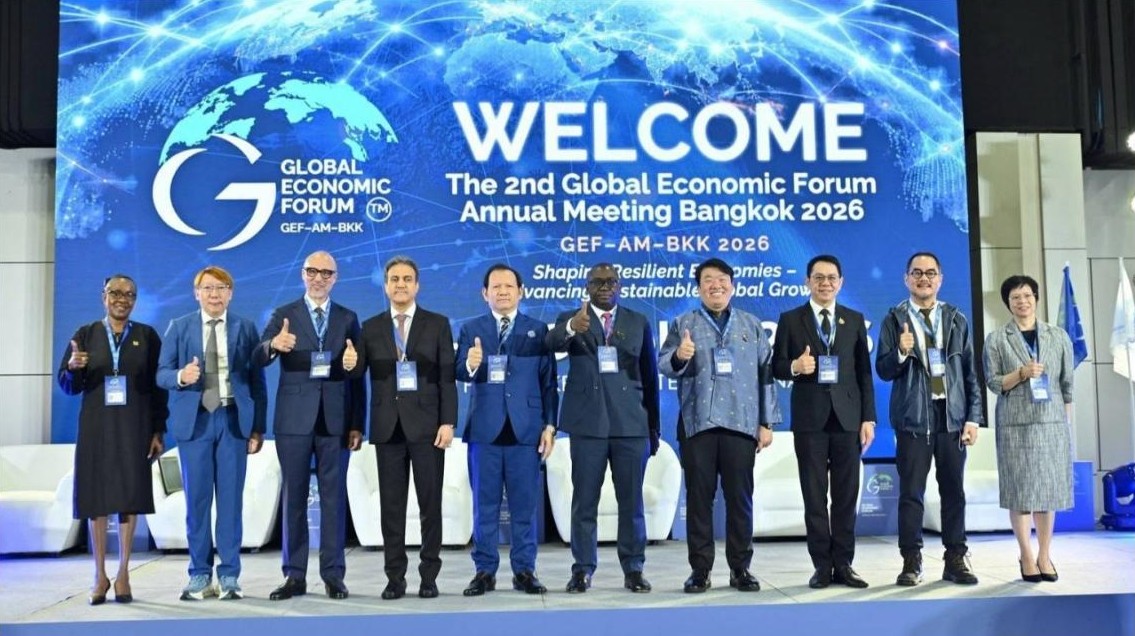
Ministers, Ambassadors, dignitaries, and industry leaders convened at The Berkeley Hotel Pratunam on 10 October 2026. (Pictured second from left: Dr Victor Tay. Disclosure: Victor serves as Co-Chairman of the Global Economic Summit.)
AI Summary
ASEAN's Energy Paradox: Abundance Without Equilibrium
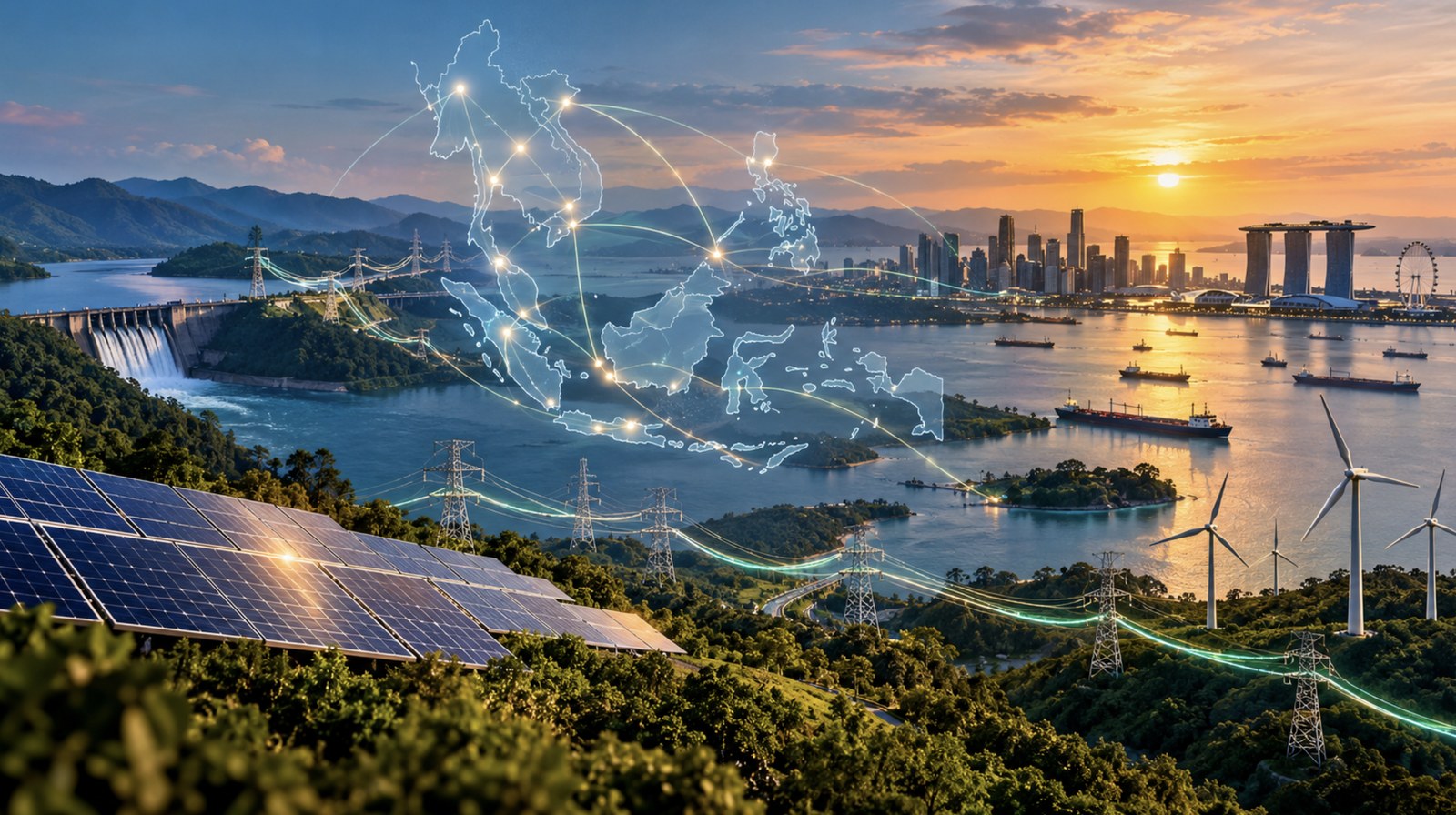
ASEAN has abundance of energy and yet unequal demand and supply needs across member countries and especially at a period of increasingly expensive climate transition.
This is the paradox confronting ASEAN.
Across Southeast Asia, the geography of energy supply bears little resemblance to the geography of electricity demand. Some countries possess substantial renewable resources but lack the transmission infrastructure or financing to commercialise them. Others have sophisticated industrial economies and rapidly expanding electricity requirements but insufficient domestic clean energy resources.
According to the International Energy Agency's ASEAN Energy Security Review, published on 6 October 2026, electricity demand has grown by around 6 per cent annually since 2015 and is projected to increase by another 5.4 per cent annually between 2026 and 2030. Indonesia and Viet Nam are expected to account for approximately 40 and 26 per cent of the additional demand respectively. Coal still provides nearly half of ASEAN's electricity supply. [1]
The ASEAN Centre for Energy's Ninth ASEAN Energy Outlook, released on 8 October 2026, presents an equally sobering long-term assessment. Under its baseline scenario, final energy consumption could more than quadruple between 2025 and 2060. Its ASEAN Coordinated Transition Scenario envisages average annual energy investment of approximately US$405 billion through 2060, covering supply and demand-side measures. [2]
These figures reveal a fundamental structural problem. ASEAN possesses considerable energy resources, but they are unevenly distributed, insufficiently interconnected and governed by different commercial and regulatory systems.
The critical question is no longer simply how ASEAN generates more electricity.
It is how ASEAN can turn the uneven distribution of energy resources into a shared competitive advantage, while ensuring that every member state receives tangible economic benefits.
The scale of these differences becomes more significant as regional demand accelerates.
Global Catalyst Advisory | Transforming Ambition into Sustainable Value™
Current Situation - Eleven Countries, Different Energy Realities
Regional energy integration will succeed only if it accommodates the different circumstances and priorities of individual ASEAN members.
Lao PDR: Renewable abundance and commercial constraints
Lao PDR has become an important regional hydropower exporter, supported by substantial investment in generation facilities and cross-border transmission. However, its dependence on hydropower creates exposure to seasonal rainfall and changing hydrological conditions. Electricity-sector debt, financial pressures and transmission limitations complicate further development.
For Lao PDR, regional integration offers an opportunity to diversify electricity buyers, improve the commercial value of existing generation and attract investment into complementary renewable resources. Long-term contractual certainty, environmental safeguards and financial sustainability will be essential.
Singapore: Growing electricity requirements and limited domestic resources
Singapore's electricity system remains heavily dependent on imported natural gas. Limited land availability constrains large-scale domestic renewable deployment, while advanced manufacturing, digital infrastructure and data centres continue to increase demand.
The country aims to import around 6 gigawatts of low-carbon electricity by 2035, potentially meeting approximately one-third of projected electricity needs. Yet identifying potential supply has proved easier than financing its delivery.
In an assessment published on 7 October 2026, Wood Mackenzie reported that Singapore had accumulated a pipeline of 9.25 gigawatts of conditionally approved or licensed electricity imports across six corridors, but none of the projects covered by its assessment had reached financial close or commenced construction. The consultancy projected that imports might contribute only 15 per cent of Singapore's electricity generation by 2035. [3]
Singapore's Energy Market Authority has characterised the 2035 import ambition as aspirational, recognising that delivery depends on commercial viability and cooperation with source and transit countries.
This illustrates the central difficulty confronting regional electricity integration. A project may be technically feasible and politically supported, yet remain commercially unbankable.
Singapore's opportunity extends beyond electricity imports. Its financial institutions, trading capabilities, digital infrastructure and experience in environmental market governance could support the wider development of a regional climate economy.
Indonesia: Extensive resources across a fragmented geography
Indonesia is Southeast Asia's dominant coal producer and possesses substantial geothermal, hydropower, solar and wind resources.
Its geographical circumstances are particularly demanding. Renewable energy resources are distributed across thousands of islands, while major industrial centres require reliable and competitively priced electricity.
Cross-border electricity trading could attract investment into renewable generation and associated infrastructure, but projects must demonstrate benefits for Indonesia's domestic energy requirements.
Wood Mackenzie's October 2026 assessment illustrates this tension. Indonesia represented approximately 37 per cent of Singapore's approved electricity import pipeline, yet export permitting, local-content requirements and long-term financing arrangements remained significant obstacles. [3]
Malaysia: A strategic centre for regional connectivity
Malaysia's geographical position makes it an important link between mainland Southeast Asia and Singapore.
Its natural gas resources, solar potential and Sarawak's hydropower capacity provide opportunities for domestic diversification and electricity exports. At the same time, expanding industrial facilities and data centres are increasing domestic electricity requirements.
Malaysia could play a larger role in regional electricity transmission, energy storage and power trading, particularly where existing infrastructure reduces project costs.
Wood Mackenzie identified the Malaysia to Singapore corridor as the most credible near-term route within Singapore's electricity import pipeline, partly because existing interconnection infrastructure reduces the need for entirely new transmission facilities. [3]
The commercial challenge will be to balance export opportunities with domestic affordability, industrial development and long-term energy security.
Viet Nam: Industrial expansion and infrastructure constraints
Viet Nam's emergence as a major manufacturing economy has substantially increased electricity demand.
The serious power shortages experienced in northern Viet Nam in 2023 disrupted industrial activity and exposed vulnerabilities in generation adequacy, transmission capacity and system planning.
The IEA's October 2026 review identifies Viet Nam as one of the regional systems already facing more advanced renewable integration challenges, including larger fluctuations in electricity supply and demand. [1]
Domestic transmission investment and clearer electricity procurement arrangements remain essential. Regional trading could provide additional flexibility and strengthen industrial supply security.
Thailand: Regional interconnection and natural gas dependence
Thailand's established transmission infrastructure and geographical position have made it an important participant in cross-border electricity trading.
Its dependence on natural gas, including imported LNG, creates exposure to international fuel prices.
Regional electricity trade offers opportunities to diversify supply, improve system flexibility and develop transmission services. Transparent wheeling charges, contractual arrangements and appropriate compensation for balancing services will be important in attracting investment.
The Philippines: Electricity affordability and island-system resilience
The Philippines faces high electricity costs, substantial fossil fuel dependence and the infrastructure challenges of an archipelagic electricity system.
Typhoons and other extreme weather events create additional risks for generation, transmission and distribution.
For the Philippines, domestic grid modernisation, renewable energy, storage and distributed electricity systems are likely to offer more immediate benefits than large-scale international interconnection.
Regional cooperation could nevertheless improve access to investment, technical expertise and financing for resilient electricity infrastructure.
Cambodia: Expanding demand and renewable development
Cambodia has made considerable progress in expanding electricity access, although rising industrial demand continues to place pressure on its electricity system.
Solar generation, storage and regional electricity connections offer opportunities to diversify supply and improve industrial competitiveness.
Credible renewable energy accounting could also become increasingly important for manufacturers supplying international markets with emissions and clean-energy procurement requirements.
Myanmar: Energy potential constrained by instability
Myanmar possesses substantial hydropower and natural gas resources, but political instability, infrastructure damage and unreliable electricity supply have severely constrained development.
Any future regional electricity arrangements would require appropriate governance, environmental and social safeguards.
Brunei Darussalam: Energy wealth and economic diversification
Brunei's oil and gas resources have supported national development and energy security.
Its longer-term opportunity lies in diversifying economic activity and electricity generation through renewable energy, industrial efficiency and participation in emerging low-carbon industries.
Timor-Leste: Energy access and infrastructure development
Timor-Leste's admission as ASEAN's eleventh member in 2025 brings additional development priorities into the regional energy agenda.
Reliable electricity access, infrastructure investment, affordability and institutional capacity remain central challenges. Distributed solar generation, battery storage and concessional financing could provide practical pathways towards a more resilient electricity system.
Electricity-exporting countries need commercially sustainable markets. Importing countries require reliable supply at competitive prices. Transit countries must recover the costs of infrastructure and system services. Developing electricity systems need access to finance and technical assistance.
Pictured 1st from right: Dr Victor Tay. Disclosure: Victor serves as Co-Chairman of the Global Economic Summit
The World Bank's US$800 Billion Challenge
International development institutions have increasingly recognised the importance of electricity connectivity to ASEAN's economic and energy security.
In October 2025, the Asian Development Bank and World Bank Group, working with ASEAN institutions, launched the ASEAN Power Grid Financing Initiative.
The World Bank estimates that realising the broader ASEAN Power Grid vision by 2045 could require approximately US$800 billion in generation and transmission investment. [4]
At the initiative's launch, ASEAN Secretary-General Dr Kao Kim Hourn described regional electricity integration as a means of improving affordability, resilience, competitiveness and living standards.
Dato' Ir. Ts. Razib Dawood, Executive Director of the ASEAN Centre for Energy, highlighted that ASEAN's approximately 7.7 gigawatts of cross-border interconnection capacity would need to more than double by 2040. [5]
The IEA's Financing the ASEAN Power Grid, published in March 2026, provides further evidence of the investment challenge.
Only approximately US$2 billion has been invested in cross-border interconnectors over more than five decades. By comparison, ASEAN invested approximately US$3.6 billion in domestic electricity transmission in 2024 alone.
The IEA estimates that more than US$300 billion will be required for electricity grid expansion and modernisation between 2025 and 2040, including approximately US$27 billion for cross-border interconnectors. [6]
These figures describe different investment scopes. The World Bank's broader estimate includes generation and transmission through 2045, while the IEA's figures concern grid infrastructure through 2040.
The disparity between historical interconnection spending and future requirements is nevertheless substantial.
The Lao PDR, Thailand, Malaysia and Singapore Power Integration Project provides a practical demonstration of regional cooperation.
Launched in 2022, the project was expanded in September 2024, when Singapore's Energy Market Authority announced arrangements to increase trading capacity from 100 to 200 megawatts through multidirectional electricity trade. [7]
The project demonstrates that electricity can move across several jurisdictions under coordinated commercial and regulatory arrangements. However, its scale remains modest relative to ASEAN's long-term electricity requirements.
The World Bank and IEA have recommended stronger project preparation, regulatory harmonisation, transparent transmission pricing, risk mitigation and innovative financing arrangements.
These measures are essential to developing the physical infrastructure. As renewable electricity moves across borders, the associated environmental attributes, commercial rights and financing arrangements must also be recognised and managed.
Without compatible systems, a connected electricity network may still operate alongside fragmented environmental markets and inconsistent accounting practices.
This is where the next stage of regional integration should begin.
The Way Forward: From ASEAN Power Grid to ASEAN Climate Grid
Global Catalyst Advisory proposes that ASEAN consider a complementary regional framework, which we describe as the ASEAN Climate Grid.
The concept extends the economic value of electricity integration by connecting physical energy infrastructure with environmental asset accounting, digital verification and climate finance.
It does not envisage replacing national electricity regulators or establishing a compulsory centralised carbon market.
Participating countries would retain regulatory authority while adopting compatible technical standards and commercial arrangements where these improve regional transactions.
Four practical mechanisms could provide the foundation.
i. Establish an ASEAN Energy and Environmental Attribute Passport
Cross-border electricity transactions involve more than the physical delivery of power.
They also involve contractual rights, transmission charges and, where applicable, renewable energy attributes that may be claimed or transferred separately.
An ASEAN Energy and Environmental Attribute Passport could provide a standardised digital record for participating transactions.
The record would identify the generation facility, energy source, electricity volume, generation period, contractual parties, relevant transmission arrangements and associated environmental attributes.
It would also establish the ownership and status of renewable energy certificates, including whether they had been issued, transferred or retired. The distinction between these instruments is important.
Electricity represents delivered energy. A renewable energy certificate represents an associated generation attribute. A carbon credit generally represents one tonne of verified carbon dioxide equivalent reduced or removed.
These instruments are governed by different accounting and ownership requirements and should not be treated as interchangeable. The passport should therefore record environmental claims without automatically converting one instrument into another.
A practical pilot could begin with the Lao PDR, Thailand, Malaysia and Singapore trading corridor.
Participating utilities, electricity market operators, certificate registries and independent verifiers could agree on common data fields and exchange information through secure digital interfaces. The pilot would need to address three specific questions:
Who has the contractual right to claim the renewable electricity attributes?
How can those claims be verified across participating jurisdictions?
What controls are necessary to prevent duplicate issuance, transfer or retirement?
The first phase could focus on a limited number of transactions using existing registries and established contractual arrangements.
Once the system demonstrates reliable data exchange, it could be extended to additional electricity corridors.
Wood Mackenzie's October 2026 assessment provides independent support for this approach. The consultancy identified the absence of a complete mechanism allowing Singapore buyers to claim the carbon value of imported electricity as one of the obstacles facing electricity import projects. [3]
An interoperable environmental attribute system would not resolve every financing or regulatory difficulty, but it could address an important source of commercial uncertainty.
ii. Develop Interoperability Between Carbon Registries
ASEAN's carbon markets are developing under different national regulations, standards and institutional arrangements.
The ASEAN Common Carbon Framework, advanced through industry associations and regional stakeholders, has gained recognition within ASEAN economic and climate discussions.
According to the ASEAN Alliance on Carbon Markets' May 2026 update, the framework had been acknowledged in the joint statement of the 57th ASEAN Economic Ministers' Meeting and the ASEAN joint statement to COP30. [8]
This represents progress towards regional coordination, although it does not constitute the establishment of a single operational ASEAN carbon market.
The next challenge is to translate common principles into practical systems. Rather than requiring countries to abandon existing registries, ASEAN could develop a federated interoperability protocol. Participating registries would retain their respective legal and administrative responsibilities while exchanging authenticated information through agreed technical interfaces.
A common data standard could specify the minimum information required for eligible carbon units, including project identifiers, methodologies, vintages, verification status, ownership records, host-country authorisations and retirement status. Secure application programming interfaces could allow participating registries to confirm the status of units and identify potential inconsistencies before transactions are completed. Where carbon units are authorised for international transfer under Article 6 of the Paris Agreement, the relevant authorisations, permitted uses and corresponding adjustment requirements would need to be recorded.
This would require cooperation between registry operators and the government authorities responsible for international carbon accounting. Interoperability should not imply that all carbon credits possess equivalent environmental integrity or commercial value. Differences in additionality, permanence, leakage, methodology and verification remain material.
The purpose is to improve the reliability and transparency of information, allowing market participants to assess credits more consistently while preserving appropriate distinctions between them. A pilot involving willing jurisdictions and established registry operators could test the technical and governance arrangements before broader adoption.
iii. Introduce an ASEAN Climate Project Bankability Protocol
The World Bank's ASEAN Power Grid Financing Initiative already seeks to improve project preparation and mobilise investment.
Its framework includes feasibility studies, technical assistance, public-private partnerships, guarantees, concessional financing and access to climate finance instruments. [4]
ASEAN could build upon this work by introducing a common climate project bankability protocol that incorporates environmental verification and commercial requirements from the earliest stages of development.
The protocol would provide a consistent basis for evaluating projects seeking regional climate investment.
Its first component would examine technical feasibility, including resource availability, grid access, generation reliability and infrastructure requirements.
The second would assess commercial arrangements, including electricity offtake contracts, transmission charges, counterparty creditworthiness and revenue certainty.
A third component would examine regulatory and sovereign risks, including permits, contractual enforceability and the allocation of responsibilities across jurisdictions.
A fourth would incorporate environmental safeguards, measurement, reporting and verification requirements, and the credibility of associated renewable energy certificates or carbon revenues.
The final component would assess financing readiness. Projects at an early stage may require preparation grants or technical assistance. Others may need concessional capital, political risk guarantees or credit enhancement. More mature projects with predictable cash flows may be suitable for conventional commercial financing.
A standardised investment data room could provide lenders and investors with independently verified technical, commercial and environmental information. Such an arrangement would not replace individual due diligence, but it could reduce unnecessary duplication and improve the efficiency of investment evaluation.
The approach is particularly relevant to carbon projects. Carbon credits are generally issued only after eligible emissions reductions or removals have occurred and been independently verified. Developers, however, require financing long before those outcomes materialise.
As we have consistently emphasised at Global Catalyst Advisory, carbon credits may be generated at the end of the process, but capital is needed at the beginning.
Carbon revenues can strengthen project economics where eligibility, verification and buyer demand are credible. They should not be assumed to compensate for inadequate underlying cash flows or unresolved investment risks.
The priority is to develop projects that are commercially viable and environmentally credible before relying on future carbon monetisation.
iv. Establish Principles for Equitable Regional Benefit Sharing
Regional electricity integration will require sustained cooperation between countries with different economic circumstances.
Resource-exporting countries need commercially reasonable returns while safeguarding domestic electricity requirements.
Transit countries must recover infrastructure costs and receive appropriate compensation for transmission and balancing services.
Importing countries require predictable supply and competitive prices. Developing electricity systems may need concessional financing, technical assistance and institutional support.
An ASEAN Climate Grid framework could establish common principles for allocating these benefits and responsibilities. Participating jurisdictions could agree on transparent approaches to transmission tariffs, infrastructure cost recovery, congestion revenues and compensation for balancing services.
Cross-border agreements should also address supply interruptions, changes in domestic demand, regulatory adjustments and other risks affecting long-term electricity contracts.
For infrastructure benefiting several countries, costs could be allocated through agreed commercial arrangements informed by expected usage and economic benefits. Independent economic assessments could help identify where shared infrastructure delivers benefits beyond those captured by individual project developers.
Developing member states could receive targeted assistance to strengthen regulatory capacity, prepare investment-ready projects and participate in environmental markets. Such arrangements would not eliminate differences in national policy or commercial negotiations.
They would provide greater predictability and help ensure that regional integration delivers benefits to participating countries rather than concentrating opportunities in a small number of markets.
This consideration is particularly important in maintaining political support for long-term cooperation.
Singapore's 2027 Chairmanship: Moving Towards Climate Implementation
Singapore's forthcoming ASEAN Chairmanship provides an opportunity to advance these ideas through practical cooperation.
Speaking at the launch of the ISEAS Climate Outlook Survey on 1 October 2026, Minister for Sustainability and the Environment Grace Fu identified energy connectivity, climate finance and climate resilience as priorities for Singapore's 2027 Chairmanship.
She also reported that Singapore's Financing Asia's Transition Partnership had mobilised US$510 million in blended finance since 2023 for green and sustainable infrastructure in Southeast and South Asia.
On carbon markets, she highlighted Singapore's Article 6 cooperation with regional partners and the importance of robust accounting, environmental integrity and project implementation. [9]
ASEAN's Next Economic Opportunity – Interoperable Power and Climate Grid
ASEAN's economic development has benefited from the complementary strengths of its member states. Its energy transition presents an opportunity to extend that principle into electricity infrastructure, environmental markets and climate finance.
Lao PDR's hydropower resources, Indonesia's renewable potential, Malaysia's geographical connectivity, Thailand's transmission infrastructure, Viet Nam's industrial expansion and Singapore's financial capabilities illustrate how different national strengths could contribute to a more integrated regional economy.
Other members would participate according to their infrastructure needs, development priorities and commercial opportunities.
The ASEAN Power Grid provides an important physical foundation. Greater electricity connectivity can improve supply diversification, facilitate renewable energy development and strengthen regional energy security. However, the full economic benefits of integration will depend on the commercial and institutional arrangements surrounding that infrastructure.
Electricity transactions require enforceable contracts and clear regulatory responsibilities. Renewable energy claims require credible accounting. Carbon markets depend on transparent verification and appropriate authorisation. Investors require predictable revenues and manageable risks.
The proposed ASEAN Climate Grid seeks to bring these elements into a more coherent regional framework. Its value should ultimately be judged through practical outcomes: electricity delivered across borders, commercially viable projects financed, environmental claims independently verified and economic benefits shared fairly among participating countries.
Singapore's 2027 ASEAN Chairmanship offers an opportunity to begin establishing this architecture through targeted cooperation and demonstration projects. ASEAN already possesses many of the resources, institutions and commercial capabilities required for the next stage of its energy transition. The challenge is to make them work more effectively together.
The region's long-term competitive advantage may depend less on the energy resources that individual countries possess than on the economic value they can collectively create through greater connectivity, trusted environmental markets and more effective capital mobilisation.
The ASEAN Power Grid can connect electricity. An ASEAN Climate Grid could provide the institutional and commercial framework through which that connectivity creates broader economic value.
That would represent a meaningful advance in ASEAN integration, extending regional cooperation beyond electricity infrastructure towards a more resilient, competitive and sustainable economy.
About the Author
Dr Victor Tay is Group CEO of Global Catalyst Advisory, an international sustainability and strategic advisory firm specialising in climate finance, carbon asset development, digital technologies and investment strategy. He is a former Chairman of the UN Global Compact Network Singapore and has held senior leadership positions spanning economic development, international business and investment banking.
This personal opinion piece by Dr Victor Tay is exclusive to RegTech.com.